Friday, 18 May 2012

[Animation] The Fresh Panda of London Zoo

This is my final project that I did in the first year of University, we had to go to Leeds Museum and choose an object that is shown there and then base an animation around it that must have a form of Narrative. I went to the "Life on Earth" section of the Museum and chose to base my animation around Pandas. However, I wanted this animation to be funny enough and up to a great standard of quality to be uploaded to Newgrounds on its completion. Below is the animatic:


The animatic was also used as the storyboard, and took about a week to create. However the animatic changed alot of things in the actual animation that I wasn't going to do before. The Zoo Keeper wasn't going to be a plain guy with a mustache and was going to be a fully modeled person, however because alot of my coursemates likes the Zoo Keeper the way he was in the animatic and I decided to keep him looking like that for the actual animation. However my coursemates also said they loved the panda like how he is in the animatic, but I decided to change the panda to a sort of Yogi Bear look. However, even with these character changes I still really enjoy how the animation came out, even though the animation is still slightly incomplete. Below is the actual animation:


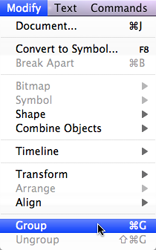
I found this animation alot easier to animate than all the other animations I have made so far in Flash, however it was time consuming. The animation was alot easier now that I have learnt to use Group's in Flash, this means I can manipulate the joints on the character easily without a layer for each of the body parts. However I wanted to work on the lipsyncing, but I wasn't able to in the end due to technical difficulties.

During the last few days of animating  lost the .flv file to the animation when it corrupted due to Flash CS5.5 crashing unexpectedly around the clock. Because of this there is a number of things I couldn't edit, these include:
  • Panda Movement
  • Panda Lipsyncing
  • Some scenes needed redoing
  • Some scenes cut off too quick
  • Improve Backgrounds
However, I was able to recover the .swf file so I could finish the animation off, but not edit the current footage I had. I ended up putting the .swf into premiere and cutting everything from when it turns into pictures, I then reopened Flash and recreated the last scene and the credits. After that it was as finished as it is going to get without having to re-due a few key scenes.

There were a few scenes in the animation that were difficult to animate, such as the scene when the Zoo Keeper throws the plate and hits his fist on the table. That was my first keyframed animation that didn't use a tutorial, it took me about 6 hours to animate as I had trouble with the fingers. Another scene I had trouble animating was the scene with were the boy was eating some nuts, I had to figure out how to show that he's on the other side of the cage, in the end I did it through tweens and showing depth of field.

The ending is a different style to the entire animation, being that it is photographs instead of animation. I did this to represent them going to the future, and being able to actually show the Panda at the Museum. This makes the story all the more complete showing that he actually is in the museum and he finally got what he wanted. I also wanted it to be as if it is in present time being realistic, I tried to make the animation look older to represent an older time, which is why I made the characters look like Yogi Bear.

The focus of the animation is that its to be about or refer to an object from the Museum, this could be anything from the Animal section to the Egyptian section. However, the story had to have some form of Narrative, it is unrestricted and is non-explicit meaning that the story unfolds on its own without a narrator, we also get to see the whole story as it unfolds. It follows the three act structure; a equilibrium which is the panda's life at London Zoo. A disruption which is when the Panda messes up the Dinner Party, and a Resolution when he gets the contract at the end.

If I had to re-due the animation I would make sure to create it using a more reliable program which wouldn't crash unexpectedly all the time, Instead I would go back to an older version of Flash such as CS4. I would make sure to keep a backup of the .flv at all times, so incase the file gets corrupted again I still have that to work with. Animation wise, I would make sure to do all the things I pointed out earlier, such as some movement, backgrounds etc. I would also make the ending a video, instead of pictures, this would look alot more professional than a cutout style animation at the end.

[Personal] Inspiration and Animators

As with any animator, I have a wide variety of people that influence my work, however when it comes to drawing I have a different inspiration than animating. By this I mean, when I animate, I have an animator who i aim to be like or better than, however when I draw there is a drawing style I like and try to add to my own. Animation wise, I aim to be better than Max Gilardi and the late Edd Gould. Both of their styles are different but use models in flash to animate, similar to how I like to animate, however there are is still alot of keyframing in the animations that they produce.

Gould uses model animation in flash, however mixes in keyframing nicely. This is something I hope to be able to achieve by the end of Uni, also the lipsyncing is really nicely done, something I hope to achieve sooner rather than by the end of Uni. Below is an example of his work:

Gilardi also uses model animation and mixes in keyframing, however with Gilardi you can see the model animation is more noticeable, especially when there is little movement such as leaning back, or turning around. However there is keyframing when in the walkcycle and places where it is really necessary. Below is an example of his work:

Drawing wise I also have two artists I aim to be as good as or have a add their style to my own, these would be Bryan Lee O'Malley and Atsushi Nishigori. Both have different styles, however are similar in some places. I have been inspired by O'malley for a while now and have adapted his drawing style to my own nicely, however I still need to improve from having a style similar to mine and using his style to create my own. This is where Nishigori comes in, I have only recently found this character designer and have found his style rather unique in a sense, though he is an anime artist his drawing style is unique and I have yet to see an anime with a style similar.

Nishigori has been a character designer for a while, helping in the production of a few series such as Gurren Lagann and Panty and Stocking with Garterbelt , two of my personal favourite animes. The drawing styles in there two are amazing, Gurren Lagann has some amazing visuals that I could only dream to make. However Panty and Stocking has one of the most unique drawing styles for an anime I have seen. Both these two animes have incredibly different drawing styles, however the drawing style I want to master the most and put it with my own is the Panty and Stocking with Garterbelt style. Below is an example of his work:


O'Malley however isn't in the animation industry, he's in the comic industry. His drawing style is something I have loved from when I read one of his comics, Scott Pilgrim. His drawing style is simple, yet effective and gives the characters he draws their own personality, this is something I hope to get better at. Even the humor he has is something I am inspired by, it is mostly pop culture referenced which gives it a unique feel, rather than slapstick humor. Below is an example of his work:


Wednesday, 16 May 2012

[Animation] Flow

This was a project I did at University, using video footage and Adobe After Effects we were to create a small video that represented Flow. We had to make this animation for the arrival of the famous Brothers Quay who were coming to Leeds to do a showcase and to direct the Leeds Canvas event. They were going to explore the flow of water and people in the city,
"They are interested in how, from out of the anonymous and everyday, myth suddenly erupts and transforms space into another dimension and then subsides, leaving the everyday altered and somehow different." (Dearden S. (2011))
For this I chose to do a paper boat going down a river, but unlike the Quay Brothers style I wanted to make it unique to my own. Below is the video:


This video wasn't that hard to create however it took me a long time to actually finish the project due to being incapable of animating or draw. During the month of March when this project was set I was put into the hospital when I broke a finger which then put me in a arm sling. This meant I couldn't do my original idea of superimposing a character on the boat and having him sail down the river. However now my finger has healed I ran out of time and decided to use this project to try and to improve my knowledge in After Effects since I don't have much.

I found that using After Effects is hard if you don't know what you are doing, but once you have read a few tutorials it can be fairly easy to use! I put all the videos together using After Effects and then added a few effects to make the video look better. Though I did put alot of effects in most of them were to experiment with the software, I used this tutorial to help me with most of the effects, such as colour alteration, giving it a nice border and even darkening the edges. 

I wanted to make the video original and something people wouldn't expect, there was three ideas that I was going to do; The first was to have a man superimposed onto the boat going down the river with calm music in the background to show like he's on an adventure, but then I re-thought the idea once I recorded the footage. The second idea was to have it be like an epic adventure with some guy superimposed onto the boat while epic music plays, I was then going to superimpose a monster in the water to show him ready to battle it. However my third idea was only thought when I realized I didn't have much time left, this was to have fun with it and make it like a fun adventure, children always play with paper boats and let them float down the river, so I found childish music to represent it to be like a child's point of view, then at the end when it crashes the music becomes sad.

The main focus of the animation was to improve our knowledge in After Effects, I did this as I now know how to edit a video to basic knowledge; this would include moving images and animating them, creating special effects such as Lens Flare, adjusting the video quality, colour and hue etc. I wanted to learn alot more After Effects with this project but only learnt the basics, however with future projects I will be sure to spread my wings alot more and try more things out.

If I had to do the film again I would try to focus more on learning better techniques in After Effects and ones that are useful for the project, rather than using all the techniques that I learnt using tutorials. I would probably try to get more footage from different angles, like from the other side of the river and try to get a shot that looks like its from the boats point of view. Also, I would try to make the original idea that I had before I broke my finger which was to have a little man on it, I think it'd be a nice idea and animation to create.

Sunday, 13 May 2012

[Animation] Watch Your Drink

After coming back to Uni from the holidays I started on a new project which was Flash based. We had to make an animation for the competition in Leeds called Knowledge Leeds in which we had to animate a small animation about being safer in Leeds. I chose to raise the subject of watching your drinks when you go out incase of being spiked.


Above is the animatic for the animation, and below i the actual animation.


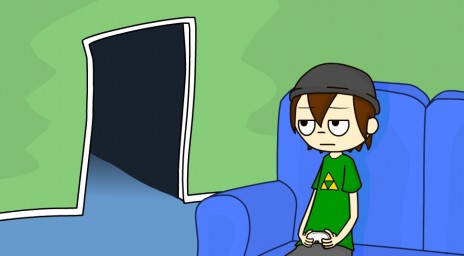
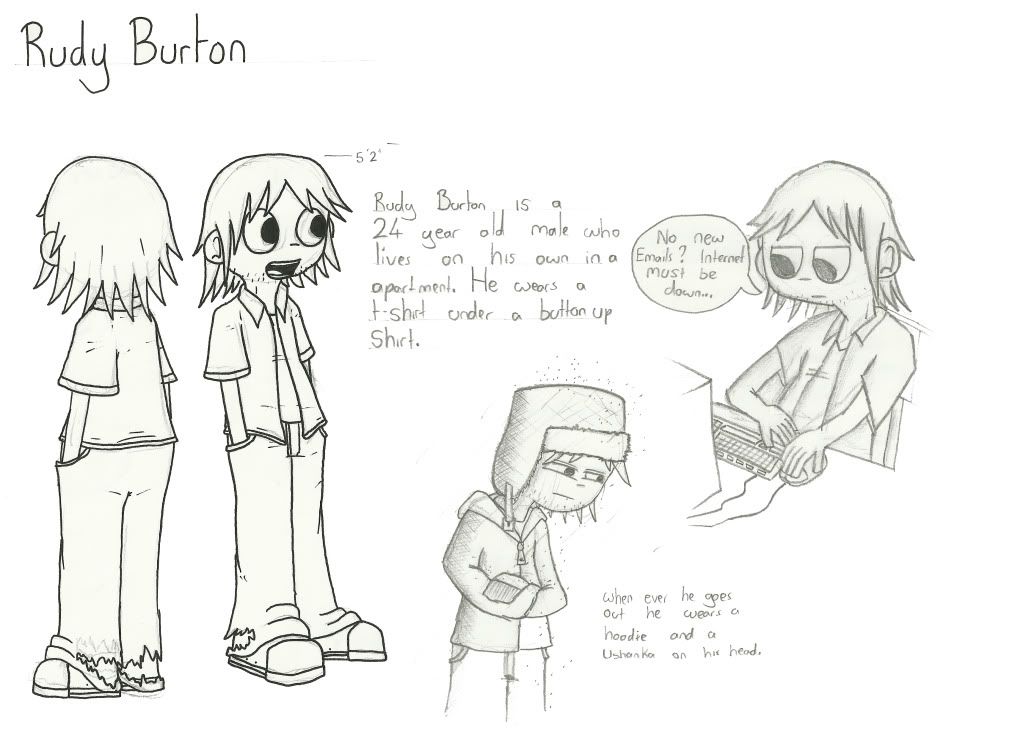
I found this animation relativity easy to animate, it was fairly time consuming and reminded me very much of when I animated my first animation, A Day in the Life of Rudy Burton because the characters and the animation is very similar. However, because it reminds me of my first animation I am fairly disappointed with the outcome, its shows that I haven't improved flash wise. I am disappointed with the backgrounds due to them being exceptionally plain. However I am rather happy with the the lip syncing as I tried to put lipsync in while the characters where moving about, which is something I have tried to avoid in the past.

Though the animation was easy to animate as I didn't give myself enough time to fully animate it, some scenes where lost due to time difficulties such as the opening scene before the club and the end scene where he gets put in the ambulance. Also by the end of the deadline it ended up being rushed and I forgot alot of things to put in, this included lights in the background that should have been there to show that they are in a club, and alot more detail on the bathroom scene. This was because I was focusing too much on certain scenes instead of actually animating the full thing, this is something i have learnt to not do in future animations. There was no real problem animating the characters as I used a basic model for each character, however only recently I learnt of a much easier way of animating model characters which is to group the objects instead of putting each arm, leg, mouth, eye, etc on different layers on the timeline.

The focus of the animation is to be an informational animation, it is to inform you of what could happen if you don't watch your drink, even around friends. I think I get the point across nicely in the animation showing an example of what could happen and how easy it is to put someone in hospital or even worse. This animation was also intended for the competition in Leeds; Knowledge Leeds but however, my animation didn't make it into the winners group. I also intended this animation to help me learn further knowledge in Flash, however I didn't learn that much from this animation apart from lipsyncing slightly better.

The main characters are characters I designed myself, on being a character I have used in the past but younger, and then the other two where characters I made up. I have used this character previously and designed a few concepts for the character in the past, he was also the character I used for 
A Day in the Life of Rudy Burton but wearing a hat. The other two where completely made up, there is one with a bowlcut and another with shortish hair. However the one with shortish hair didn't originally have shortish hair, I couldn't decide what i wanted the character to have and was originally going to have an afro, but ended up coming to the conclusion of giving him his current hair. The character style of the animation is my own with a hint of a style from Bryan Lee O'Malley the creator of the Scott Pilgrim comics. He is my original influence for my own art style and can be seen in the eyes the head shape, it is more noticeable in my past work such as concept art for A Day in the Life of Rudy Burton.

If I had to re-due the animation I would fix the audio problem, it goes incredibly loud at times, also the music overlaps each other alot of the time which was a problem I only learnt after hearing the animation through speakers when presenting it to the class. I would create a better background than the one I have now as it is very flat, I would add more people the the club and also make flashing lights to show that they are in a club. I would also fix the continuity error when he pours the drug in his drink, he is holding it differently than what he is in the previous scene. I would also try to make sure I don't always use tweens, this animation was tweened so much even though I wanted to get in the habit of doing frame by frame animation instead of tweens.

Sunday, 22 January 2012

[Personal] History of Animation

Before animation could be on film it was played on a variety of devices to be watched or played, the earliest device that played animation was a Magic Lantern;
          The Magic Lantern consists of a translucent oil painting and a single lamp, when you put them together in a dark room the image would appear large on a flat surface, some of the slides for the lantern contained parts which you could mechanically operated to present limited movement on the screen. They were majorly popular with travelling showmen and vaudeville performers. An example of the type of animation that was produced by the magic lantern was 'The Rat Swallower' which was presented by the Laterna Magica Galantee Show.
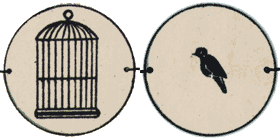
          A Thaumatrope is a device in which you insert a disk or card with a picture on each side attached to a piece of string you could create a very basic moving image by twirling the strings quickly between the fingers. This was presented as a toy and was very popular in the Victorian times.
          The Phenakistoscope is a device that used a spinning disk attached vertically on a handle. The centre of the disk is a series of pictures which are drawn to interact with the frames in an animation. The user would spin the disk and look through the moving slits around its circumference at the reflection in a mirror and it would show a small animated image. There was a downside to this form of animation, it could only be viewed by one person at a time. However, the Zoetrope was soon made after using the same principles to fix this problem.           The Zoetrope was made in the early 1800s period. The device was made from a cylinder with slits vertically cut into the sides. Beneath the slits on the inside of the cylinder is a band which has a set of individual frames from a video/film, or a sequence of drawings/photographs. The earliest invention of the Zoetrope was made in China; it was a devise that was hung over a lamp. The rising air turned vanes at the top which were hung from translucent paper of pictures painted on them, which would appear to move if the device is spun at the right speed. Although, a more modern Zoetrope was then brought up in the early 1800's which could be spun manually, when spinning it gives the illusion of animation to the viewer.
          Flip-book animation the simplest form of animation, it’s a series of drawings of a sequence of some kind in the same place but in a different position. Once all the drawings are complete then the pictures are stacked on top of each other, the traditional way of reading the flip book would be holding the book with one hand and then flipping through the pages with the thumb of the other hand, this gives the illusion of a moving image.
          The Praxinoscope is a device which was made after the Zoetrope, it improved on the Zoetrope by replacing its slits with an inner circle of mirrors. The mirrors are placed so the reflections of the pictures or animation would stay in place easier and make the image quality better and less distorted unlike the Zoetrope. Soon after, improvements where made to this device and a man known as 'Charles-Émile Reynaud' created a device which would allow the Praxinoscope to be projected onto a flat surface to show hand-drawn animated cartoons to a larger audience. Although this was overshadowed by the photographic film projector created by the Lumière brothers. These two brothers are known as the earliest two film makers in history, during their public debut their films where short and mostly no longer than a minute in length, however the people loved watching them. 
          The Mutoscope is an early motion picture device used to view animations or film scenes by inserting a coin and looking through the lens and moving hand crank to make the images move. This device used the same principles as a flip-book by having individual images (or frames) rapidly shown one after another to represent movement. The crank could be turned in either direction but it wouldn't reverse the scene. It was used greatly in the “peep show” business but was also used in the animation business.

Animation Technology after Film:
Technology has advanced since film had been invented, The Computer Animation Production System (CAPS) is technology that replaced cel animation and its purpose was to computerize the ink and paint processes used in traditional animation. Using CAPS is cheaper than continuously using cels using India ink or other expensive techniques. It was created by the Walt Disney Company together with Pixar.
Stop motion was created after film, it is the technique of getting an object or a model and putting it in a position and taking photos one frame at a time. There are different types of stop motion animation, such as clay animation, puppet animation and cut out animation. Each of these are all different techniques used for stop motion.
Computer generated imagery (CGI) is creating a 3D model and animating it, almost in a virtual version of stop motion and can be used to create anything, such as characters, backgrounds and foregrounds. CGI has a similar sense to traditional animation due to it being very tedious and time consuming. CGI has now been used in almost every field; artvideo gamesfilmstelevision programscommercialssimulators and printed media, it is used to create special effects or visual graphics.
Cel-shaded animation is computer graphics made to appear hand-drawn, similar to a comic book or cartoon. It is more popular in video games but is still used in animations, and more commonly it is used in anime. The name comes from Cel animation which is used for traditional 2D animations.

Traditional Animation:
          Traditional animation which is also referred to Hand-drawn animation or Cel animation, It is the oldest form and most popular form of animation. In traditional animation the cartoon consists of each frame of the animation being hand drawn. Although traditional animation and Cel animation are the roughly the same thing, although Cel animation consists of layers. It is the process of drawing each frame in separate parts instead of drawing it all at once, Usually it consists of 2 to 3 cels, although the number depends on how many characters you use in that scene. The first cel is the mouth cel, which is the movement of the mouth to show speech. The second cel is the character cel, which contains the character which has been drawn, the only thing that appears on the character cel is the character drawn. The third cel will be the background cel, which will be the entire background of the animation; this doesn’t need to be changed unless the background is moving throughout the animation. The technique of using Cel animation has become obsolete in the beginning of the 21st century due to computer technology taking over.

Stop Motion:
          Stop motion animation is the technique of creating or using real world objects and photographing them one frame at a time, this will create an illusion that the object is moving. There are many kind of stop motion animation, Clay animation is made by crafting a clay figure from clay or similar material to create a stop motion animation, usually the figure would have a wire frame inside them so that the figure can be posed correctly and accurately. Cut-out animation is a type of stop motion animation which is made by moving 2D pieces of material such a paper, card, cloth, ect. Puppet animation is a type of stop motion animation which involved puppet figures interacting with each other in an environment suited to them. The puppets have similar frames inside them to the clay animation to put them in positions that the user wants.

Digital and 3D Animation:
          Digital animation is the technique of creating an animation using a computer to draw or create the characters or the models depending on whether it is in 2D or 3D. 2D digital animations are created and edited using a computer application to allow them to be moved and edited; an example of this would be Flash. The application that you use to create the animation will have automated and computerized versions of traditional animation techniques; these include tweening, morphing, onion skinning and other examples. 3D animations are modelled and edited using a computer application. To animate the model you have created or edited the model is given a skeleton structure that can control the mesh to allow it to move in a process called rigging. Various techniques can be applied to 3D models, examples of this is fur or hair, effects such as water and fire and other examples. These techniques fall under the category of 3D dynamics.